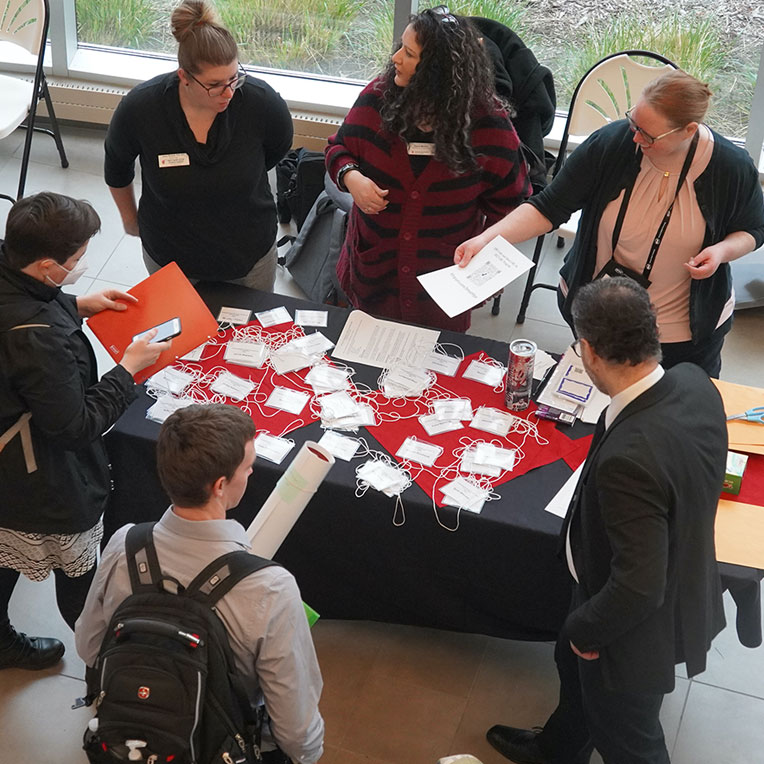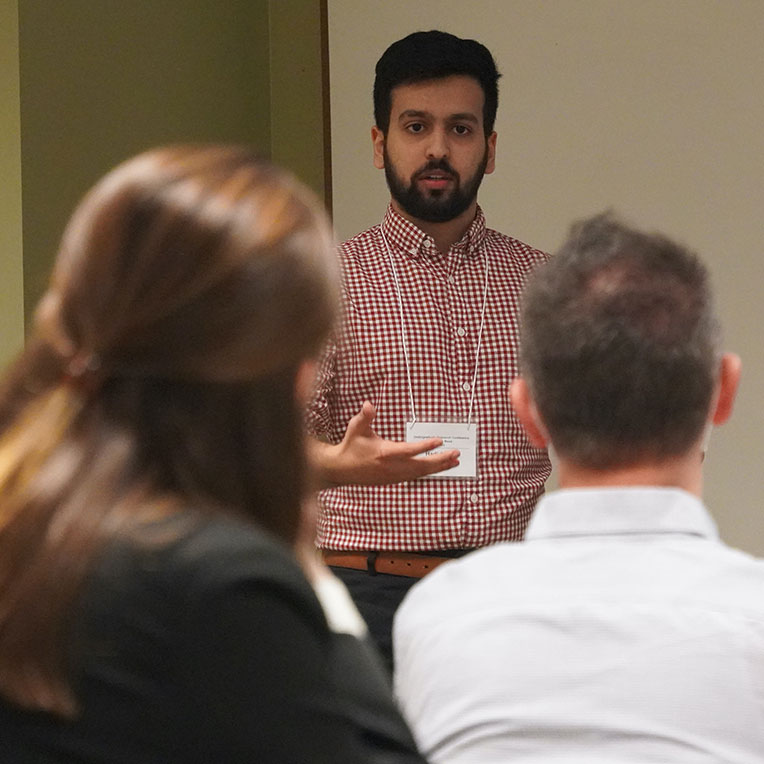
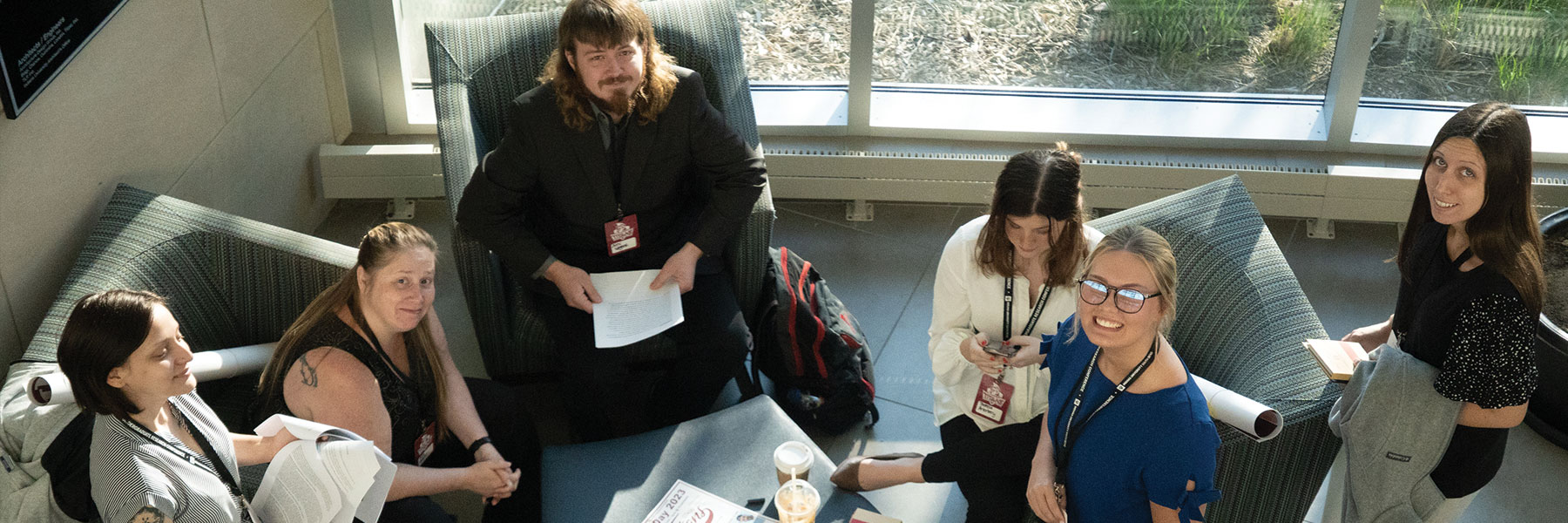
Undergraduate Research Conference

2026 IU South Bend Undergraduate Research Conference

Your work. Your voice. Your stage.

Welcome to the IU South Bend Undergraduate Research Conference. You spent the semester (or longer) digging deep into the questions that matter. Whether you have analyzed data in the lab, interpreted complex texts, films, or historical events, implemented community-based projects, or created original written or creative works, your time and effort should not just live in a folder on your laptop.

The URC is your opportunity to step into the professional world of academia and the arts. It is a day to showcase your findings, sharpen our public speaking skills, and connect with a community of scholars who are just as curious as you are. This isn’t just a presentation; it is a milestone for your resume and a first look at your future career.

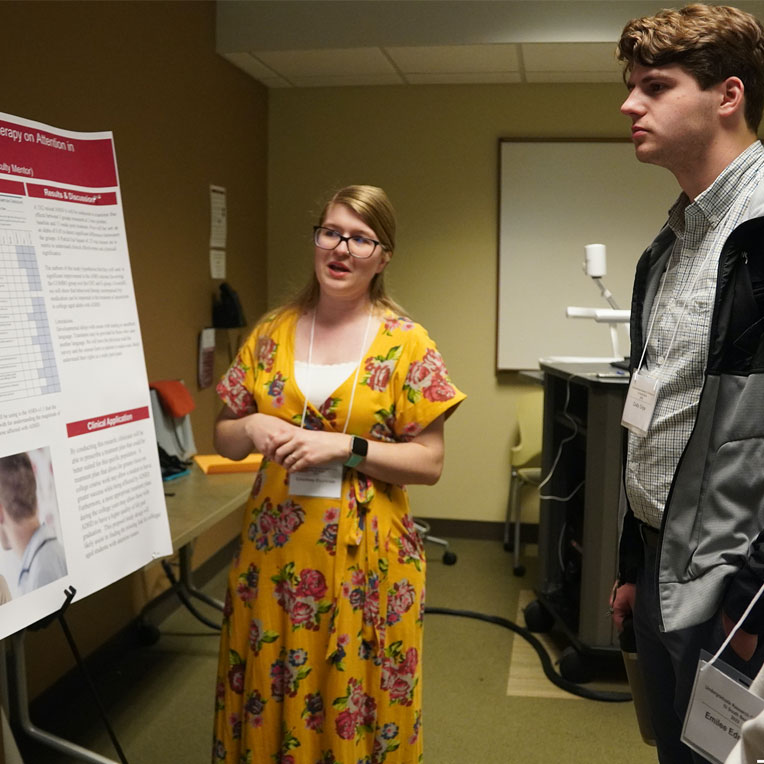
The conference is open to students in any academic program at IU South Bend or other primarily undergraduate institutions in the region. The work presented may be the product of a class or an independent research project or creative activity. Students may choose to submit a proposal for the poster session or for a concurrent panel session. Students who are accepted for a concurrent panel session will have 15 minutes to present their submission, in whatever format they choose.

For more information about this year's conference, please contact Stacie Merken (smerken@iu.edu) or Barbara Spinda (bspinda@iu.edu), Co-Chairs, Undergraduate Research Committee. 
2025 Program

2025 Conference Submissions

Setting up Poster

Ways to Share Your Work

We believe “research” looks different in every discipline and we encourage submissions that show the wide range of creative and scholarly works that you put so much time and effort into. You can contribute in the way that best fits your discipline.

  • Scientific Studies: Presenting results from laboratory experiments or field data collection.
  • Technical Developments: Showcasing the engineering of new tools, such as chemical biosensors or software applications.
  • Social Science Investigations: Sharing findings from surveys or focus groups about human behavior and societal attitudes.
  • Economic Policy & Market Analysis: Use quantitative data to evaluate the impact of financial trends, labor statistics, or government policies on specific industries or global markets.

  • Creative Writing: Submissions of original poetry collections, short stories, or personal memoirs.
  • Books & Graphic Narratives: Using visual storytelling and illustrations to explore themes like identity or personal history.
  • Translation Projects: Presenting the process and results of translating a work from one language to another, such as translating children’s books.

  • Program Reports: Describing the design and results of community-based health or education initiatives.
  • Needs Assessments: Presenting data collected to identify obstacles in a specific community, such as dental care access for college students.
  • Outreach & Awareness Campaigns: Showcasing materials and impact data from public awareness projects.
  • Business Plans & Entrepreneurship: Develop and present a complete professional strategy for a new venture, including market feasibility, financial forecasting, and an operational roadmap.
  • Financial Modeling & Risk Assessment: Create and explain mathematical simulations that predict market movements, evaluate investment portfolios, or assess the economic viability of a project.

  • Literary Analysis: Performing a deep dive into a text or film using specific theoretical frameworks.
  • Media Content Analysis: Systematically examining patterns in fictional TV shows, movies, or podcasts to understand social constructions of topics like crime or gender.
  • Political & Historical Analysis: Investigating historical events or modern political trends, such as analyzing primary elections or the impact of major historical landmarks.

  • Systematic & Critical Reviews: Providing a rigorous appraisal of existing literature to answer a specific professional or clinical question.
  • Policy Evaluations: Critiquing current laws, government practices, or platform moderation methods to advocate for ethical progress.

  • Studio Arts (Painting, Drawing, & Sculpture): Display physical or digital creations accompanied by an Artist Statement that links the creative process to a central research question.
  • Photography & Digital Media: Share a curated collection of visual work, such as a documentary photo essay or experimental digital art, while explaining the conceptual narrative and technical choices behind the lens.
  • Music (Performance & Composition): Perform an original composition or a classic piece in a "lecture-recital" format that bridges the gap between musical mastery and an analysis of the work's historical or theoretical significance.
  • Design & Visual Communication: Showcase professional-grade projects like branding packages, architectural models, or UI/UX designs, highlighting how applied design thinking was used to solve real-world problems.
  • Theater & Performance Art: Bring research to life through a live performance or a showcase of technical theater design, supported by an explanation of the historical or theoretical frameworks that guided artistic choices.

Dress the Part

You’ve done the high-level intellectual work; now it’s time to look like the expert you’ve become. While your research is the star of the show, dressing professionally boosts your confidence and signals to your audience that you take your work seriously. You don’t need a brand-new wardrobe to look professional. The goal is to look polished, comfortable, and ready to present, so the focus stays on your work.

Aim for clothing that is:

  • Clean and wrinkle-minimized
  • Appropriate for a public, academic setting
  • Comfortable enough to stand, walk, and present
  • Not distracting (you want attention on your research, not your outfit)
Easy outfit ideas

Option 1: “Business casual” (great default)

  • Button-down shirt, blouse, or nice sweater
  • Slacks, chinos, or a knee-length/longer skirt
  • Closed-toe shoes or clean, dressy flats/loafers

Option 2: “Conference casual” (still professional)

  • Polo or solid top + cardigan
  • Dark, neat jeans only if they look polished (no rips/tears)
  • Clean sneakers or casual shoes that look intentional

Option 3: “More formal” (if you prefer)

  • Blazer or suit jacket
  • Dress pants or a professional dress
  • Dress shoes or flats

What to avoid (so you’re not worrying during your presentation)

  • Clothing that’s very revealing, sheer, or see-through
  • Strong slogans or graphics that could distract
  • Hats (unless for religious/cultural reasons)
  • Clothes that restrict your movement or make you tug/adjust constantly
  • Heavy fragrance (some attendees have allergies)
Don’t have professional clothing? You still belong here.

If you don’t have access to business attire, that should never be a barrier to presenting your work. Wear the most polished version of what you have.

COMING SOON: The IU South Bend Career Closet will offer gently used professional attire for all students. The anticipated date is March 31. Look for more information in the Daily Titan and around campus as the day approaches.

Faculty Mentor Responsibilities & Expectations

The Undergraduate Research Conference is only possible because of the dedicated faculty who guide our students through the research and creative process. Faculty mentors serve as the bridge between classroom learning and professional scholarly presentation.

  • Proposal & Abstract Review: Mentors are expected to review and approve their students' conference proposals and abstracts before submission to ensure they meet the academic standards of their discipline.
  • Quality Assurance: You are responsible for ensuring the high quality of the student’s final work, whether it is a poster, a formal talk, a paper, or a creative performance.
  • Guiding the Process: Mentors provide the necessary encouragement and tireless effort required to help students navigate the complexities of research, from initial inquiry to final results.
  • Professional Mentorship: Mentors help students prepare for the professional environment of the conference by advising on effective communication, visual design for posters, and professional etiquette.

  • Supportive Presence: Whenever possible, we encourage mentors to attend their students' sessions to provide a familiar face and support during the presentation.
  • Active Engagement: Mentors are encouraged to engage with all student presenters, not just their own, by attending diverse panels, asking insightful questions about their methods, and celebrating their findings.
  • Service Opportunities: Many faculty mentors also contribute to the conference’s success by serving as Session Moderators or Judges for poster and oral presentations.

The Undergraduate Research Conference is officially recognized as an outlet for high-quality student work at IU South Bend. Helping your students succeed here is a significant contribution to their professional development and to the university’s culture of scholarly and creative works.